Rain finds the chimney first
Garden Grove gets most of its rain in a handful of winter storms, and a chimney that stayed dry all summer can let water in on the first heavy night. The chimney is a hole through the roof with brick around it, and every joint between brick, metal and roofing is a place for water to get past. When it does, the stain usually shows up on a ceiling or wall near the fireplace, sometimes a long way from where the water actually entered.
From a code point of view, the roof around a chimney has two jobs: the flashing must seal the joint between roofing and masonry, and on wide chimneys a cricket must stop water from piling up on the high side. When either is missing or failing, the leak is a code item, not just a nuisance.
The cricket rule
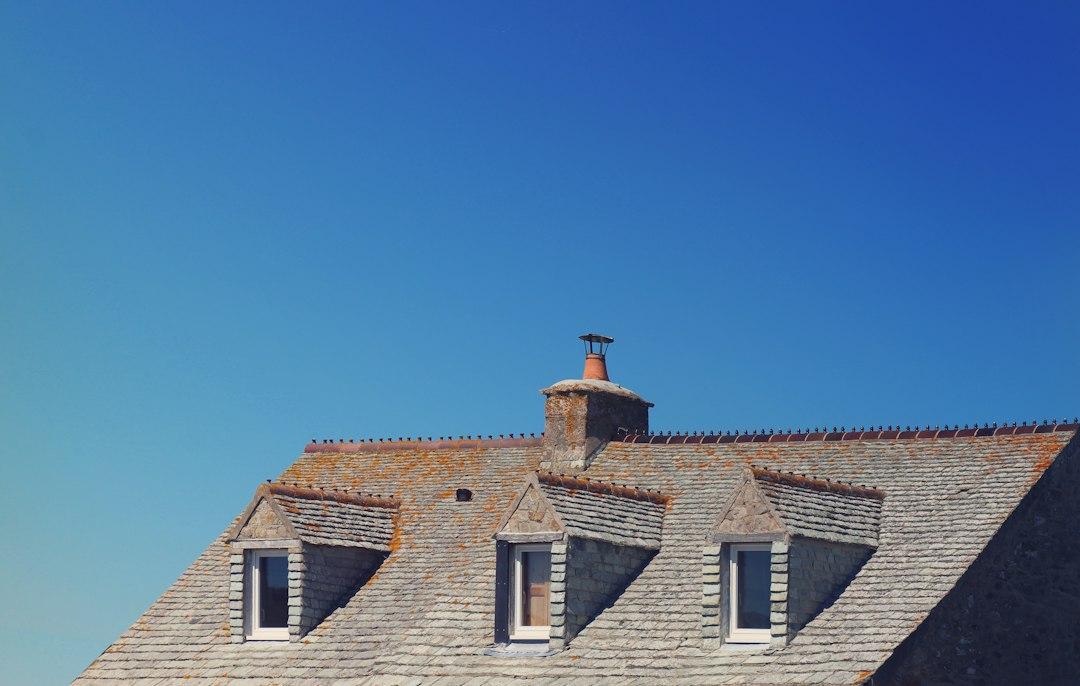
The California Residential Code calls for a cricket, sometimes called a saddle, on the uphill side of a chimney wider than 30 inches measured across the slope, unless the chimney sits on the ridge. A cricket is a small framed peak covered in roofing or metal that splits running water around the chimney instead of letting it dam against the brick. Many older Orange County homes were built with wide chimneys and no cricket at all. Leaves collect there, water sits there, and in time the flashing gives way.
What the flashing has to do
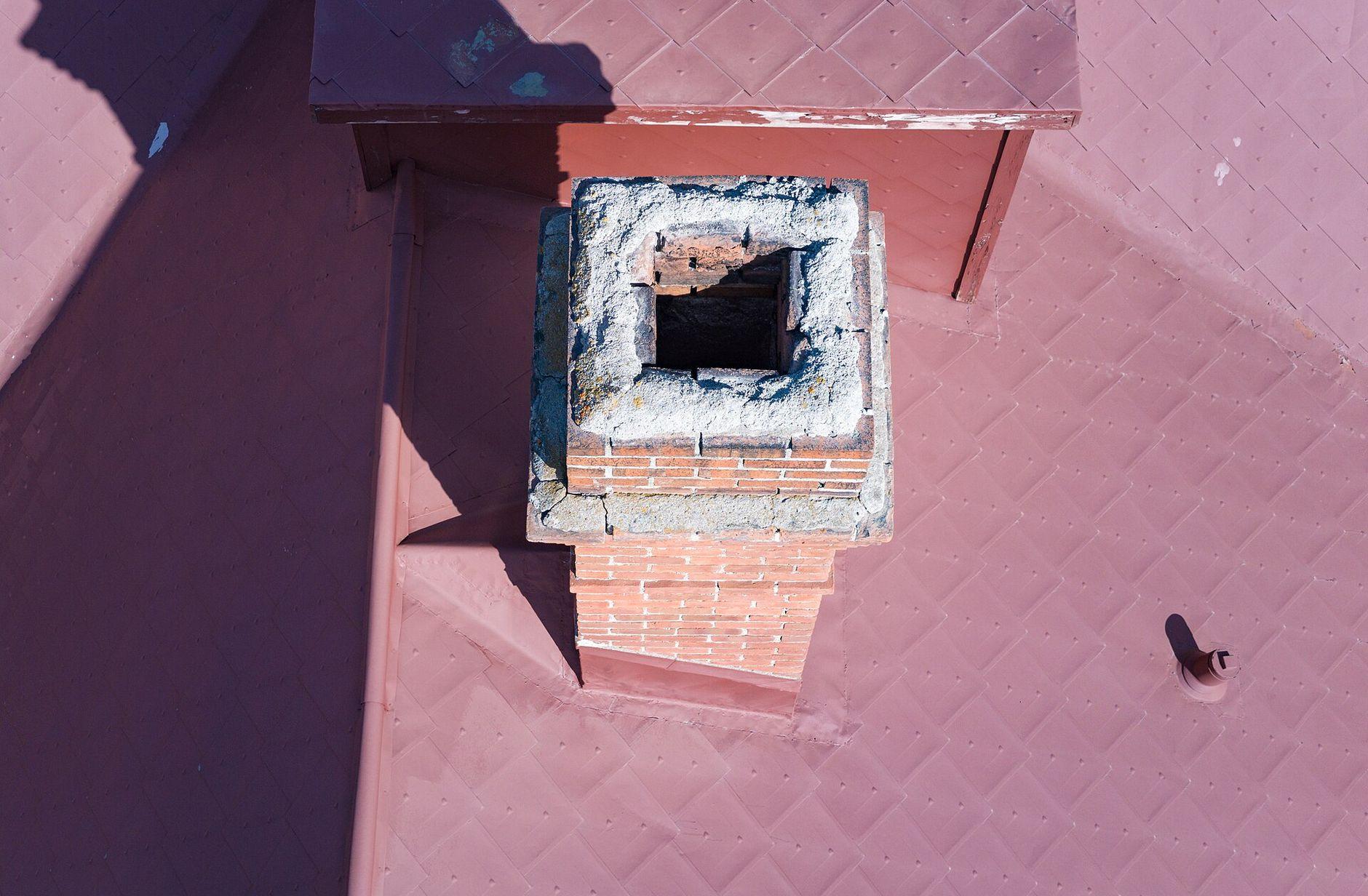
Flashing is two layers of metal working together. The lower layer lies under the roofing and bends up against the chimney. The upper layer is set into the mortar joints and lapped down over the first. When the mortar crumbles, the upper layer pulls loose and water runs behind it. When a roofer has smeared tar over the joint instead, the seal fails as soon as the tar cracks.
Other ways water gets in that we check on the same visit:
- a crown cracked across the top
- brick that soaks up rain like a sponge
- no cap, so rain falls straight into the flue
- a chase cover rusted through on a framed chimney
What the repairs cost
Three of the usual fixes have published ranges on our price list:
| What we do | Range |
|---|---|
| Find the source and stop the leak | $585 to $3,500 |
| Build a cricket on the high side | $465 to $1,055 |
| Cricket plus a fresh set of flashing | $700 to $1,750 |
We price crown repair, chase covers and stand-alone flashing work house by house, after seeing them, since no two are the same size. A Level 2 inspection at $410 is worth adding if the leak has gone on long enough to raise questions about the flue.
What moves a leak repair through its range: the number of entry points, the roof material, the height and width of the chimney, and whether wet framing or drywall needs attention once the source is sealed.
To get a figure, describe the leak in the quote form: which room it shows in, whether it appears with every storm or only the heavy ones, and roughly how wide the chimney is where it meets the roof.
Insurance and leaks
Homeowner policies treat sudden water damage and slow, long-running leaks differently, and an adjuster will want to know which one this is. We do not advise on coverage, but our written findings say where the water entered, what failed and what we saw of the damage, with photos. That is the record a claim or a later sale will ask for.
What to expect from the visit
We look at the chimney from the roof and from the attic, and we check the inside of the firebox and smoke chamber for water marks. Where the source is not obvious, we test one area at a time. The written quote names each entry point we found and what we will do about each one, so you can see whether a cricket is required or whether new flashing alone will do.
Leaks on framed chimneys
Not every chimney in Garden Grove is brick. Many homes from the 1970s on have a factory-built metal flue inside a wood frame finished in stucco or siding. Water gets into these through the metal cover at the top, called a chase cover, when it rusts, sags or was cut too small. It also gets in where the siding meets the roof. The leak runs down the inside of the frame and can soak the insulation and the top of the fireplace box for a long time before a stain shows. The chase cover page shows that repair.
When the leak has gone on for a while
A slow leak that has run for several winters can rust the damper, flake the inside of the flue, and soften framing next to the chimney. Once the source is sealed, we note anything that has to be dried out or replaced, and whether the flue itself should be checked on camera before the next fire.
Why a cricket is worth it even where it is optional
On a narrow chimney the code does not require a cricket. We still sometimes suggest one on low slope roofs or where trees drop a lot of leaves behind the chimney. It is a small framed piece of roof that saves the flashing from sitting in water for half the winter.
If the chimney also needs a cap, read spark arrestor caps: rules and cost. For the leak service itself, see the chimney leak repair page and the flashing repair page. We fix leaks across Garden Grove, Santa Ana, Cypress and La Mirada.
Water stain after the last storm? Tell us about it on our contact page and we will arrange a visit.
Turning This Article Into a Scope
Dillon Chimney Experts reads each chimney against NFPA 211, the maker's listing and any city permit rule, then writes up what it found. Describe the request and the reason behind it, and the reply names the service, the level and any published price. Requests come from Garden Grove, Santa Ana, Cypress, La Mirada and the other areas on our list.