Why a sale triggers the deeper inspection
NFPA 211, the fire code standard that covers chimneys and vents, groups inspections into three levels and says when each one fits. A home changing hands is one of the named reasons for a Level 2. The logic is simple: the buyer has no history for the chimney. Nobody can say how hard it was used, whether a flue fire ever cracked the tile, or whether a quake shifted it. The only way to know is to look inside the whole flue.
The general home inspection in a Garden Grove purchase does not do that. The inspector notes the fireplace, maybe shines a light up past the damper and writes "recommend evaluation by a chimney specialist." Such a note defers the question to someone else rather than answering it, which is often the reason buyers call us.
Level 1 versus Level 2 in a sale
| Level 1 | Level 2 | |
|---|---|---|
| What we look at | Accessible parts of the fireplace and chimney | All of that plus the inside of the flue on camera |
| Attic and roof | Where reachable | Checked as part of the visit |
| Report | Written findings | Written findings with video stills |
| Price | $170 | $410 |
| Fits a sale? | Rarely enough | Yes, it is the level NFPA 211 names |
A seller who just wants a first read before listing can start with a Level 1. For the buyer's side of a contract, we recommend the Level 2 every time.
What the camera finds in Garden Grove houses
Most homes here have one chimney with one clay flue, sometimes two flues where a furnace once vented. The camera shows the joints between the tiles, the smoke chamber and the inside of the crown. Common findings:
- Cracked or offset tiles. Often from an old flue fire or from ground movement. A cracked flue fails the standard for use until it is lined or repaired.
- Gaps in the smoke chamber. Rough brick and open joints that let heat reach the framing.
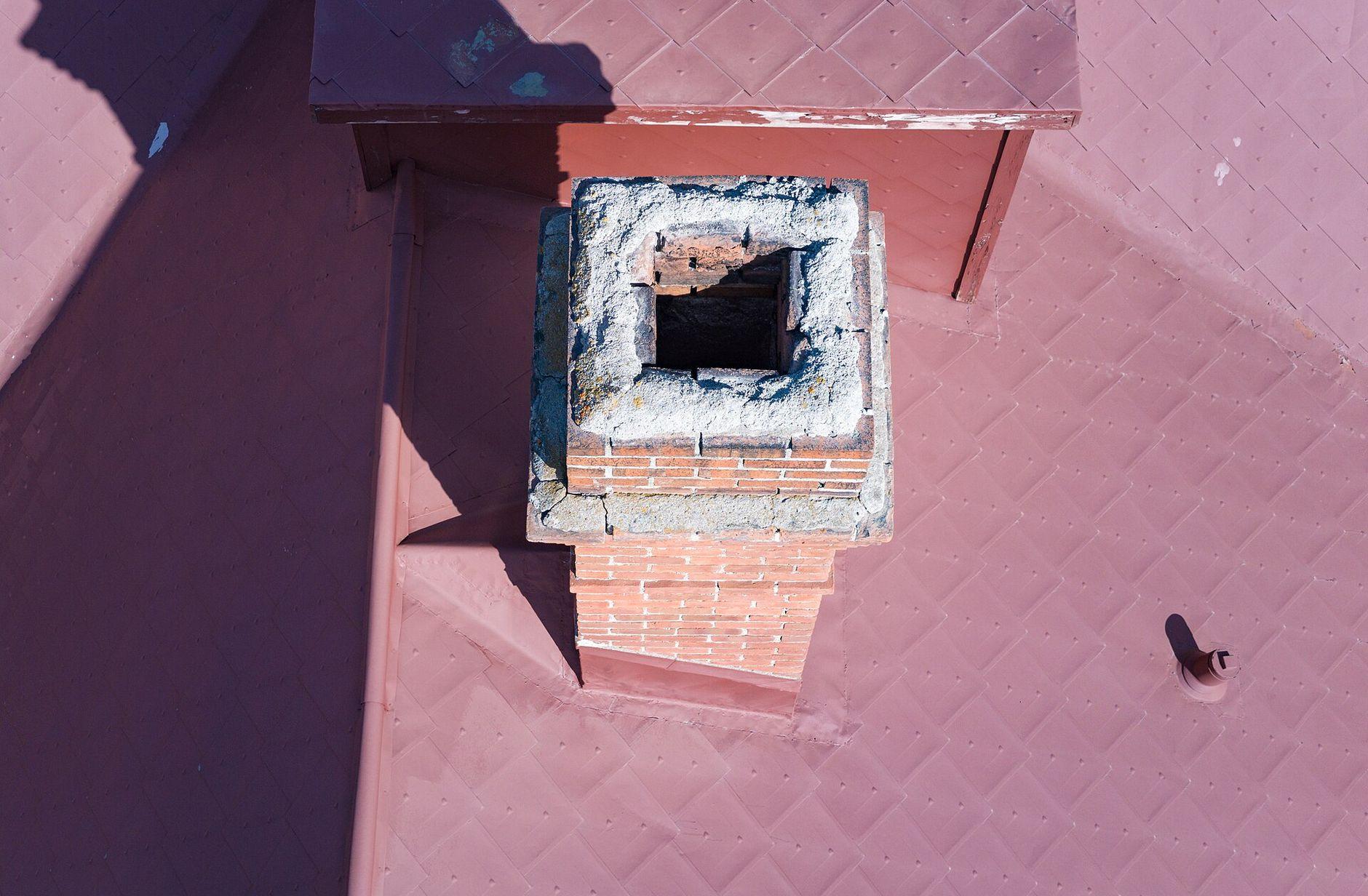
- Crown cracks. Water gets into the brick from the top.
- No cap or a failed screen. Easy to fix, but still a finding.
- Leaks at the roof line. Stains in the attic beside the chimney.
Each item in our report comes with a photo and a plain statement of what it means: fine to use, use with care, or do not use until repaired.
How the report gets used in the deal
For a buyer, the report is plain information: it tells you what you are buying. You can ask for a repair, ask for a credit, or accept the chimney as it is with your eyes open. For a seller, an early Level 2 lets you fix small items before listing or disclose them on your own terms instead of reading them in the buyer's request.
We send the report to whoever books the visit, and to the agents or others they name. Should the seller ask for a buyer-funded report later, the buyer decides whether to share it.
What decides the cost of what comes next
The inspection price is fixed at $410. The repairs it leads to are not, because they depend on the findings. A few of them do have published ranges:
| Typical follow-up | Our range |
|---|---|
| Cap fitted after the inspection | quoted on site |
| Water entry found and fixed | $585 to $3,500 |
| Sweep before the next fire | from $440 |
Relining, crown work and rebuilding are written up for the specific chimney once the camera has shown the flue.
To book a Level 2 inside your contract window, use the form and tell us the property address, whether you are buying or selling, and the agent who should get a copy. We call back to set the visit and arrange access.
Gas fireplaces count too
Buyers sometimes assume a gas fireplace needs no chimney inspection. The standard does not make that exception. A gas log set in an old masonry firebox still vents up a flue, and a sealed gas unit still has a vent that can come apart, rust or get blocked by a nest. In a sale we inspect the vent path the same way, look at the burner area and the glass, and note whether a carbon monoxide alarm is mounted nearby.
Timing inside escrow
The inspection contingency in a typical California purchase contract gives the buyer a limited number of days. A chimney inspection is easiest to fit early, ideally alongside the general inspection, so there is time to get a repair quote if the camera finds something.
Condos, townhomes and shared chimneys
Garden Grove and Santa Ana have plenty of condos and townhomes with a fireplace in each unit. In those buildings the chimney often belongs to the association, not the unit owner, even though the fireplace sits in the living room. A Level 2 on a unit still looks at the whole flue, but repairs to the stack, the crown or the roof flashing may be the association's job and need its approval. Our report notes which findings sit inside the unit and which belong to the common structure, so the buyer, the seller and the board can each see their share. Property managers can read more on our HOA and property manager page.
Who gets what
- the person who books receives the full report with photos
- agents and others named at booking receive the same report
- the quote for any repairs is a separate document, so it can travel with the repair request
For more detail on the sale itself, see our home sale chimney inspection page. Agents can read what we send to agents. For the inspection on its own, see the Level 2 service page.
Buying or selling in Garden Grove, Santa Ana, Cypress or La Mirada? Book the camera inspection on our contact page.
Turning This Article Into a Scope
Dillon Chimney Experts reads each chimney against NFPA 211, the maker's listing and any city permit rule, then writes up what it found. Describe the request and the reason behind it, and the reply names the service, the level and any published price. Requests come from Garden Grove, Santa Ana, Cypress, La Mirada and the other areas on our list.